
Technology · Procurement Optimization & Transformation
Mid-Market Companies Are Overpaying for their Technology Stacks
Inside Consulting delivers technology procurement transformation across SaaS, cloud infrastructure, and corporate spend for growth-stage and PE-backed companies. We replace stale contracts and fragmented vendor relationships with a leverage-based sourcing strategy. We do the work. You keep the savings.
Schedule a No Cost Spend AssessmentThe Problem
Technology Vendor Contracts Age. The Companies Paying Them Have Grown.
Growth-stage and PE-backed technology companies share a common cost problem: a vendor stack priced for a business that no longer exists. Every acquisition, every new hire, every tool adopted without central approval adds cost without systematic oversight. By the time a CFO or PE operating partner looks closely, the outside spend base has become a tangle of auto-renewed contracts, redundant tools, and rates benchmarked against the company’s headcount three years ago. Technology procurement transformation starts with making that spend visible and then building the structure to control it.
SaaS Sprawl
The average technology company manages 275+ software applications. Unused licenses, overlapping tools, and shadow IT are the norm. No one owns the rationalization until margins compress or a liquidity event forces the question.
Cloud Costs Nobody Manages
AWS, Azure, and GCP bills grow with usage but rarely shrink through deliberate action. Right-sizing, reserved instance commitments, and consumption benchmarking require focused effort most finance and engineering teams don’t have bandwidth for.
Stale Contracts, Outdated Pricing
Mid-market technology companies haven’t run a rigorous RFP on most of their vendor categories in years. Contracts auto-renew. Vendors retain the margin. Purchasing power accumulates as the company scales but is never converted into better rates.
No Procurement Infrastructure
Technology companies rarely have formal sourcing functions. Engineering owns the cloud vendor. Finance owns the budget. Neither has the category expertise or market data to drive systematic cost reductions across the full vendor portfolio.
What We Reduce
Procurement Category Coverage Built for Technology Companies
We work across 60+ spend categories specific to technology operators. Below are the highest-impact procurement cost reduction areas for growth-stage SaaS companies, managed service providers, and PE-backed technology platforms.
SaaS & Tech Platforms
SaaS & Software Spend
- SaaS license rationalization & right-sizing
- Vendor consolidation & tool rationalization
- Software contract renegotiation
- Cybersecurity & compliance tooling
- Data & analytics platforms
- Productivity & collaboration tools
- Marketing & sales technology
- Recruitment & HR technology
All Technology Companies
Cloud & Infrastructure
- AWS reserved instance & savings plan optimization
- Azure commitment & hybrid benefit optimization
- GCP committed use discount optimization
- Cloud consumption analysis & right-sizing
- Cloud storage & data transfer cost reduction
- Managed service provider (MSP) cost optimization
- Colocation & data center contracts
- Network & connectivity costs
All Technology Companies
Corporate & Enterprise Spend
- Telecom & connectivity
- Professional & managed services
- Recruitment & talent acquisition fees
- Benefits administration & HR vendors
- Corporate travel & T&E programs
- Office & remote work infrastructure
- Merchant processing & payment fees
- Logistics & shipping
Cloud Cost Optimization
The AWS Bill Keeps Growing. Most Companies Have Never Addressed It Deliberately.
Cloud infrastructure is one of the largest and fastest-growing cost lines in most technology companies’ P&Ls—and one of the least rigorously managed. Engineering owns the architecture. Finance owns the budget. Neither has the bandwidth or commercial focus to systematically reduce what gets spent.
What We Find
Most technology companies running on AWS, Azure, or GCP have significant waste embedded in their cloud spend: over-provisioned instances running at a fraction of their capacity, on-demand pricing where reserved instances or savings plans would deliver 30 to 40 percent reductions, and consumption patterns that have never been benchmarked against available commitment structures.
The gap between what most mid-market companies pay and what they should pay with disciplined commitment management is material—and it compounds every month it goes unaddressed.
What We Analyze
- Instance utilization rates across all compute workloads
- Reserved instance and savings plan coverage gaps (AWS)
- Committed use discount optimization (GCP)
- Azure hybrid benefit and reservation opportunities
- Idle and underutilized resource identification
- Storage class and data transfer cost analysis
- License-included vs. BYOL economics
- MSP and reseller agreement economics
- Cloud tagging and cost allocation governance
Our Approach
How Our Technology Procurement Transformation Process Works
Inside Consulting runs technology procurement transformation engagements end-to-end, from spend discovery through vendor negotiation to realized savings. Technology companies don’t have procurement departments. We are yours.
Spend Discovery
We map your full outside spend base across all vendors, contracts, and cost centers to identify the categories with the highest cost reduction potential. For technology companies, this includes SaaS subscriptions, cloud infrastructure, and all corporate indirect spend.
Weeks 1–4What we do in this phase
- Extract and normalize accounts payable data across all entities and cost centers
- Map spend by vendor, category, and business unit into a unified spend cube
- Inventory SaaS subscriptions and identify shadow IT and unmanaged tools
- Pull cloud cost and utilization data across AWS, Azure, and GCP
- Flag vendor fragmentation, contract gaps, and auto-renewal exposure
- Deliver a prioritized opportunity map to your team
Category Analysis
We analyze contract terms, assess vendor leverage, and prioritize categories by savings magnitude and speed to capture. For SaaS and cloud, we conduct utilization and commitment analysis to size the addressable opportunity before any negotiation begins.
Weeks 3–8What we do in this phase
- Assess contract status, terms, and expiration dates across all vendors
- Conduct SaaS utilization audit — active users vs. licensed seats by application
- Analyze cloud consumption patterns and benchmark against commitment structures
- Identify leverage points and competitive alternatives for each vendor relationship
- Size savings potential for each prioritized category
- Develop negotiation strategy and identify competitive sourcing options
Vendor Negotiation
We lead all vendor conversations, armed with utilization data, competitive benchmarks, and credible alternatives. You stay out of it. We drive cost reductions without disrupting your operations, engineering relationships, or existing vendor partnerships.
Months 2–6What we do in this phase
- Run competitive sourcing processes across targeted spend categories
- Lead all vendor conversations, RFP responses, and commercial negotiations
- Apply volume consolidation leverage across the full vendor portfolio
- Negotiate pricing, terms, service levels, and renewal structures simultaneously
- Manage engineering and business stakeholder alignment where relevant
- Execute cloud commitment changes in coordination with your engineering team
Savings Realization
We track and verify savings against a defined baseline, ensuring commitments become captured EBITDA rather than projected opportunities that never materialize on the P&L.
Months 3–9What we do in this phase
- Establish a verified savings baseline before any changes go live
- Track realized savings against baseline by category and vendor
- Confirm new pricing is being honored in actual invoices and cloud bills
- Address off-contract purchasing and unmanaged tool adoption
- Deliver regular savings reporting to finance and PE sponsors
Governance & Holdback
We document contracts, set renewal alerts, and install lightweight procurement governance so savings don’t erode as your company continues to grow, hire, and acquire.
Month 6 onwardWhat we do in this phase
- Build preferred vendor lists and purchasing guidelines by category
- Centralize contract storage and set expiry and renewal alerts
- Establish approval framework for new SaaS tool adoption
- Define onboarding path for future acquisitions into the vendor base
- Implement cloud cost tagging and budget alert infrastructure
- Hand off governance documentation to your finance or ops team
Client Results
Technology Procurement Engagements, Delivered
A sample of our procurement cost reduction work in technology, spanning SaaS platforms, managed service providers, and PE-backed technology roll-ups.
Technology · Outside Spend & Operations
Data Intensity
$11M+ annual EBITDA $5M labor savings, $2.7M vendor reduction, $4M ARR improvement via revenue leakage elimination and pricing optimization
PE-backed managed IT services platform. Multi-year engagement spanning strategic sourcing, operational restructuring, and net revenue retention across a complex spend base.
View Case Study →Technology · Outside Spend & ZBB
DHI Group
$6.8M vendor reduction & $3M in ARR ZBB for marketing realigned spend with ROI; improvements funded reinvestment and drove stock price recovery
Publicly traded technology company. Procurement optimization, zero-based budgeting, and revenue improvement across a multi-product technology platform.
View Case Study →Technology · Outside Spend & ZBB
HOSTING.com
$10M+ annual EBIT over 6 years Vendor spend, net revenue retention, ZBB, and organizational productivity across a 6-year partnership
PE-backed managed hosting and cloud services company. Comprehensive value creation program spanning outside spend, revenue optimization, and zero-based budgeting.
View Case Study →Technology · Post-Merger Integration
Ntirety
$4.3M sourcing synergies 3x the pre-merger estimate through creative application of leverage beyond scale alone
PE-backed managed cloud and security services provider. Post-merger procurement integration that captured substantially more synergy value than the original deal model projected.
View Case Study →Technology · Outside Spend & Revenue
Evolve IP
$2.8M recurring EBITDA $2.3M vendor reduction in network and software, plus $550K ARR improvement from leakage reduction
PE-backed unified communications and cloud technology provider. Vendor spend reduction across network, software, and technology categories combined with revenue leakage elimination.
View Case Study →Technology · Outside Spend & Revenue
Teklinks
$2.3M/year vendor reduction Plus co-designed a new IT security bundle with a strategic vendor that boosted revenue growth
PE-backed technology solutions provider. Vendor cost reduction across the technology stack combined with commercial strategy that unlocked a new revenue-generating product offering.
View Case Study →Selected technology clients




Thought Leadership
What We Know About Technology Procurement Optimization
Our partners write from experience, not theory. The pieces below represent the frameworks and findings we apply in technology procurement engagements every day.
Guide
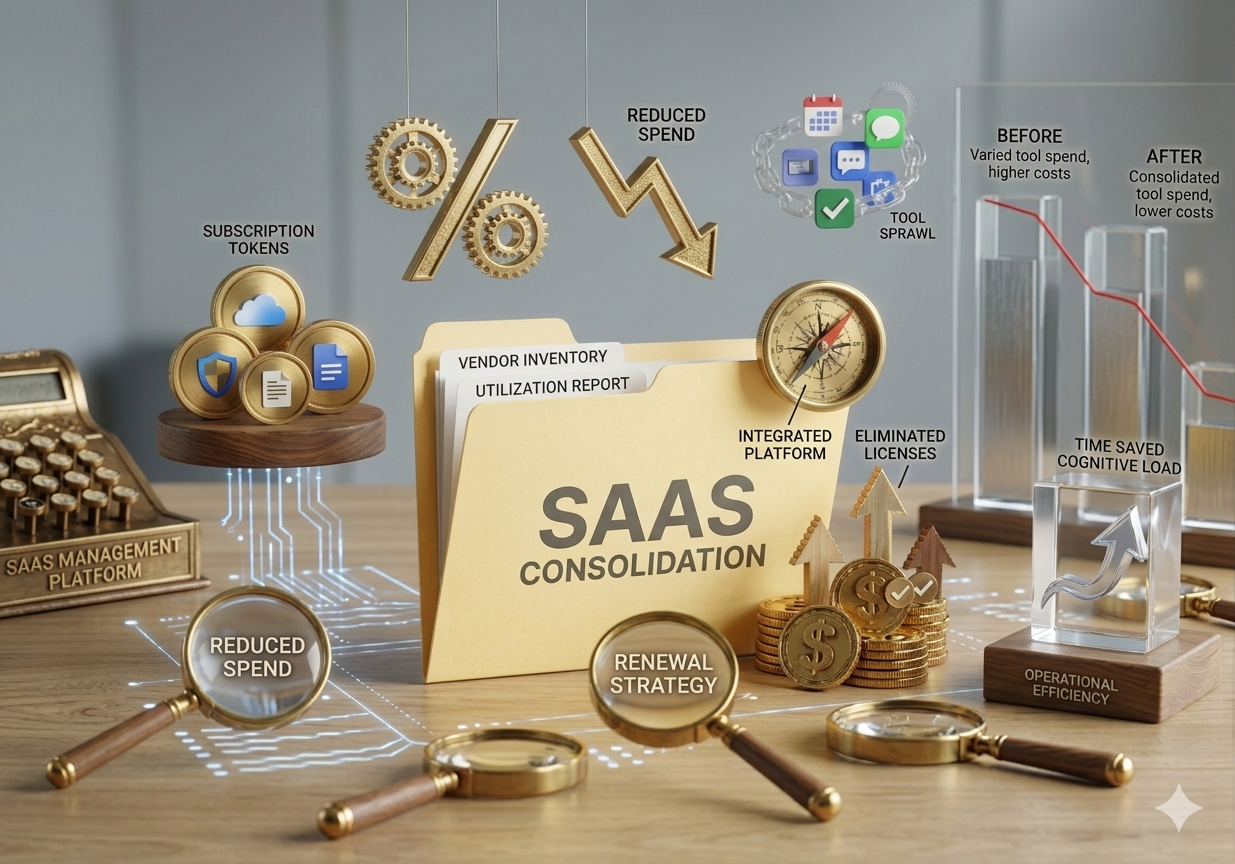
The Hidden Cost of Too Many Tools: A SaaS Vendor Consolidation Guide
Unmanaged SaaS estates waste 25 to 30 percent of software spend and drain five or more working weeks of employee productivity per year. A practical framework for CFOs and operating leaders at mid-market and PE-backed companies.
Read the Guide →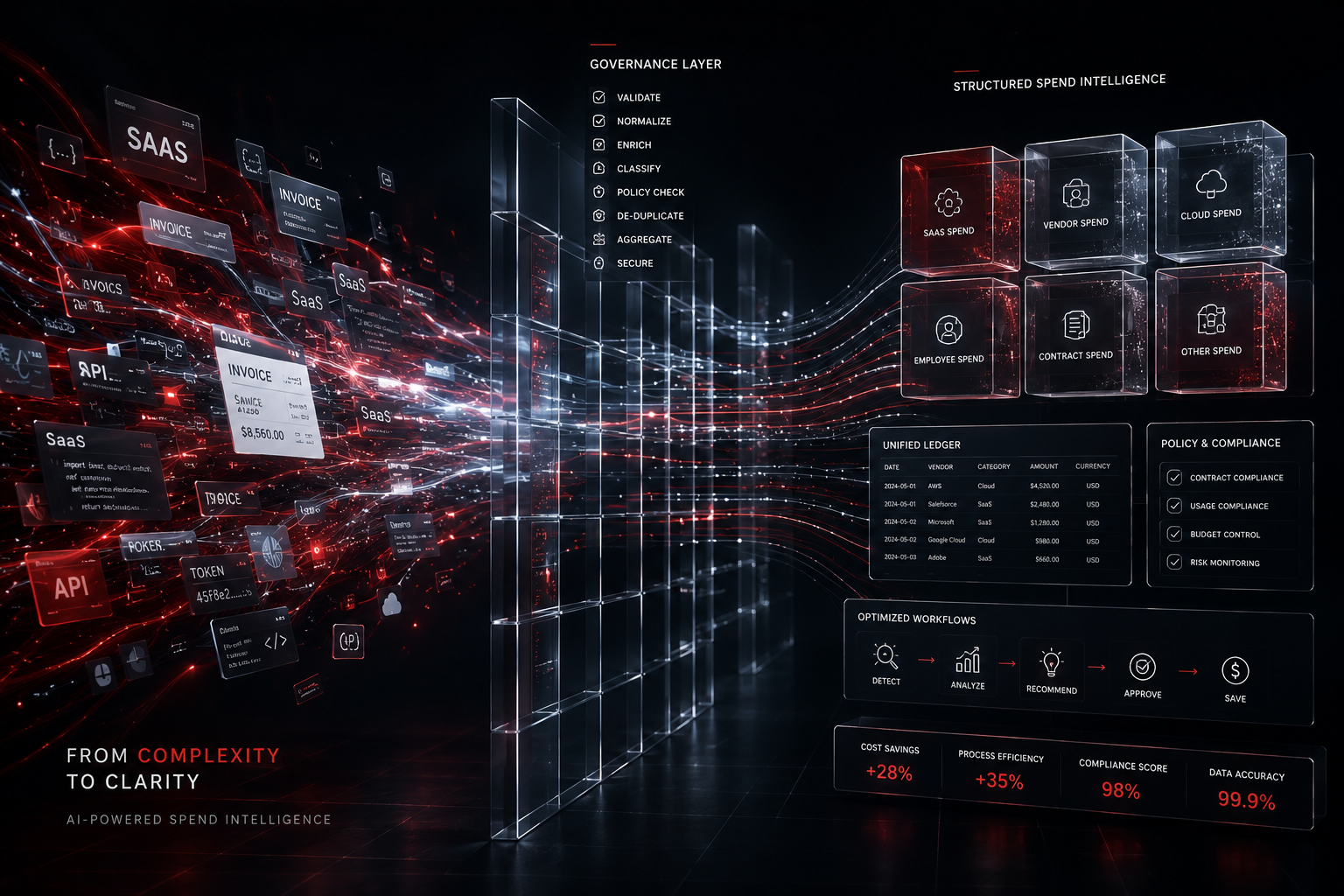
Insight
SG&A Procurement in the AI Era
AI is reshaping what technology companies need to buy and from whom—and creating new renegotiation leverage in the process. A playbook for CFOs and PE-backed companies navigating vendor contracts, make-vs-buy decisions, and procurement governance in a shifting landscape.
Read the Insight →
Insight
The Growth Tax: Why Growth-Stage Companies Overpay for Their Tech Stack
As companies scale from Series A through Series C, vendor contracts priced for an earlier, smaller business quietly drain margin. The gap between what you pay and what your purchasing power should command is the Growth Tax.
Read the Insight →
Framework
The Reseller Margin Trap
Technology resellers leave meaningful margin embedded in OEM and distributor agreements—not because of poor negotiation, but because of structural gaps in how vendor relationships are managed. A framework for reclaiming it.
Read the Framework →Why Inside Consulting
Built for Technology Companies That Need Procurement Transformation Without Building a Department
Technology companies growing through acquisition or organic expansion have a narrow window to capture cost synergies before the next raise, recapitalization, or exit. We move fast, go deep, and work on your timeline.
Technology Track Record
Our partners are McKinsey- and BCG-trained with deep mid-market technology experience spanning SaaS, managed services, cloud infrastructure, and PE-backed roll-ups. We understand the commercial dynamics of technology vendor relationships, not just general procurement theory.
At-Risk Fee Options
We offer engagement structures that tie our compensation directly to realized savings, including hybrid and at-risk fee models. If we don’t find procurement savings, you don’t pay the same. Period.
No Software. No Dashboard.
We don’t sell a FinOps tool or SaaS management platform that requires your team to implement and maintain it. We do the category work directly, handling analysis, negotiation, and implementation with minimal burden on your finance or engineering teams.
Mid-Market Focus
We don’t serve the Fortune 500. We work with $75M to $1B technology companies where a dedicated procurement transformation initiative delivers disproportionate EBITDA impact relative to its cost.
PE Fluent
We speak the language of private equity: EBITDA improvement, MOIC, value creation plans, and 100-day priorities. Our procurement engagements are designed to appear on a board deck and survive due diligence.
Speed to Savings
We identify and deliver first procurement savings within 60 to 90 days. Technology companies on PE timelines can’t wait for a 12-month process. We structure engagements to produce early wins and build from there.
What technology procurement transformation actually looks like
Technology procurement transformation is not a FinOps tool implementation, a SaaS management platform deployment, or a vendor portal migration. It is the process of replacing fragmented, department-level vendor relationships with a structured, leverage-based supply strategy—built on spend visibility, competitive sourcing, and governance that holds. Inside Consulting has executed this work for technology companies at every stage of the PE hold cycle, from 100-day value capture through pre-exit margin improvement. The result is not just lower costs in one category. It is a vendor base your organization can actually manage as it continues to grow, hire, and acquire.
Common Questions
Frequently Asked Questions
What is technology procurement optimization consulting?
Technology procurement optimization consulting is the systematic process of reducing what a technology company spends with outside vendors, across categories like SaaS software, cloud infrastructure, telecom, professional services, and other indirect spend. A procurement optimization consultant analyzes current vendor contracts, identifies where the company is overpaying relative to market rates, and leads negotiations to capture verifiable cost reductions. Inside Consulting does this work end-to-end for mid-market and PE-backed technology companies, from spend mapping through contract execution and savings verification.
How do mid-market technology companies reduce vendor costs without a sourcing team?
The most effective approach combines spend visibility, competitive sourcing, and vendor consolidation. Most mid-market technology companies lack a complete picture of what they spend because it is fragmented across teams, entities, and cost centers. Once you establish that baseline, you can prioritize categories by savings potential, run competitive sourcing processes, and consolidate volume to create negotiating leverage. Inside Consulting runs this entire process for clients, from spend mapping through contract execution, with minimal burden on your internal finance or engineering teams.
How is this different from a FinOps tool or SaaS management platform like Zylo or Apptio?
FinOps platforms and SaaS management tools show you what you have and what you are spending. They produce dashboards and alerts. Inside Consulting produces outcomes. We conduct the utilization analysis, identify the specific savings opportunities, lead the vendor negotiations, and verify that the savings materialize on your P&L. A dashboard that tells you cloud spend is high does not renegotiate your AWS commitment structure. We do. For technology companies that have already tried a tool and still have the problem, that distinction is the point.
Does this work for technology companies that aren’t PE-backed?
Yes. While many of our clients are PE-backed or approaching a liquidity event, we work with privately held and founder-led technology companies as well. The driver is size. Companies above $75M in revenue typically have enough outside spend to warrant a systematic procurement cost reduction program. The absence of a PE sponsor does not change the economics of the opportunity.
How long does a typical technology procurement engagement take?
Engagements typically run 6 to 12 months. The spend discovery and baseline phase takes 3 to 4 weeks. First negotiated savings typically follow within 60 to 90 days of engagement start. The full savings program runs through contract execution and implementation across all targeted categories, including cloud commitment changes and SaaS rationalization.
What does an at-risk fee structure look like?
Under an at-risk structure, our fees are linked to verified, realized savings rather than projected estimates. We work with you to define a savings baseline and measurement methodology upfront. Our compensation is then tied to what we actually deliver. We also offer hybrid models (partial retainer, partial at-risk) that work well for companies that need more billing certainty while still aligning our incentives with results.
Do you work on AWS and cloud costs specifically?
Yes. Cloud infrastructure cost optimization is a core part of our technology procurement practice. We analyze instance utilization, reserved instance and savings plan coverage, committed use discount opportunities, and MSP agreement economics across AWS, Azure, and GCP. We do not sell a FinOps platform. We do the analysis, identify the addressable savings, and work with your engineering team to execute right-sizing and commitment changes. The average mid-market technology company can reduce cloud spend by 20 to 35% with a structured utilization analysis and commitment optimization process.
How much internal time will this require from our finance or engineering teams?
We design our engagement model specifically to minimize the burden on your team. Initial spend data collection and cloud cost export requires 4 to 8 hours from a finance or engineering contact. After that, we lead all vendor interactions, negotiations, and category analysis independently. Cloud commitment changes require coordination with your engineering team, but we handle the commercial analysis and negotiation entirely. Our clients describe the experience as handing it to Inside Consulting and getting results back.
Can you work across multiple acquired entities or portfolio companies?
Yes. This is one of the highest-value applications of our procurement work. PE-backed technology roll-ups often hold 5, 10, or 20+ acquired entities, each with its own vendor relationships and contracts. We consolidate and harmonize those into a single leveraged supply base, capturing volume-based savings that no individual entity could negotiate on its own. We also help structure the procurement onboarding process for future acquisitions so each new entity enters a managed supply base rather than perpetuating fragmentation.
We already negotiate hard with our vendors. Why would we need outside help?
Internal negotiation and structured procurement are fundamentally different activities. Internal stakeholders optimize for relationship continuity, deal flow, and quarterly targets. That creates a natural bias toward accepting vendor pricing rather than restructuring it. Inside Consulting brings category-level market data, competitive sourcing methodology, credible alternatives, and the commercial independence to negotiate without the constraints your team operates under. Companies that describe themselves as tough negotiators typically find that what they have been doing is renewing aggressively, which is not the same as competitive sourcing.
Find Out What Your Technology Company Is Overpaying
We’ll run a no-cost spend assessment and give you a category-level view of where procurement savings are most likely—before any engagement begins.
Request a Spend Assessment See Our Full Approach